
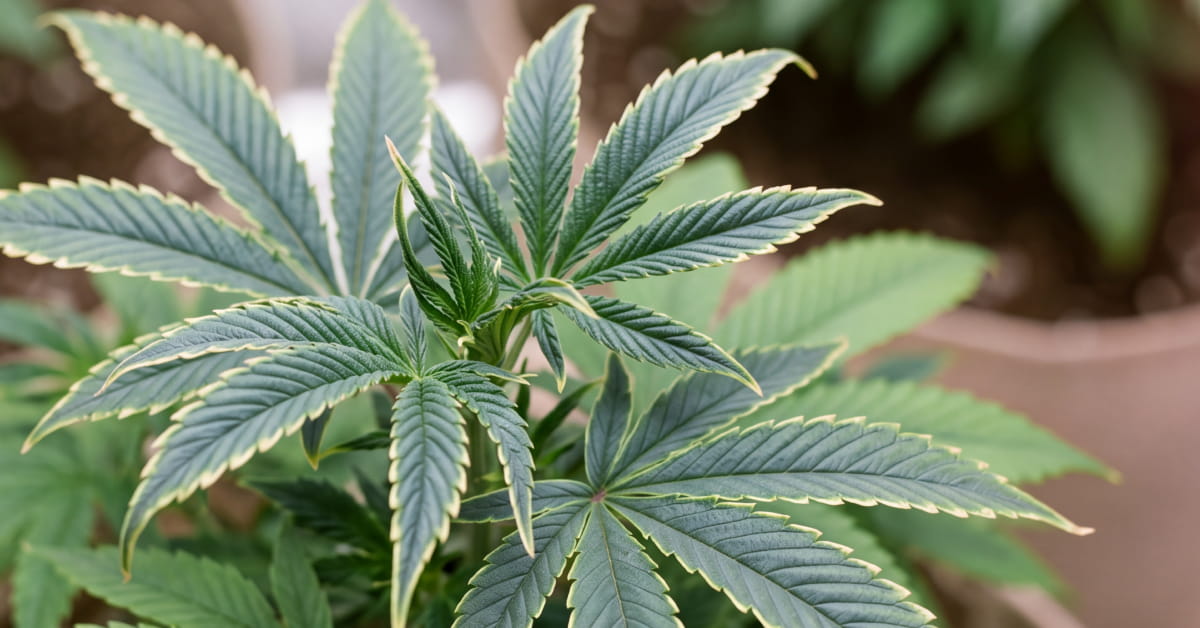
Cannabis copper deficiency shows up as yellow or white leaf tips, a metallic blue-gray sheen, and stalled new growth. It ranks among the rarest nutrient problems in cannabis, and it almost always traces back to pH lockout rather than a true shortage of copper.
You fix it by correcting the root-zone pH first, then restoring copper through balanced nutrients. Damaged leaves may not fully recover, but healthy new growth returns once the lockout clears.
In short: Before you add any copper, check your root-zone pH. A reading out of range (6.0 to 6.3 in soil, 5.8 to 6.2 in hydro) is the culprit in nearly every case. Correct the pH (clearing any salt buildup with a flush first if it’s there), then feed balanced nutrients so the plant can absorb the copper that’s already present. Watch the fresh growth to confirm the fix is working.
What Is Copper Deficiency in Cannabis?
Cannabis copper deficiency occurs when a plant cannot access enough copper (Cu) to support core functions. Copper works as a micronutrient, which means the plant needs it in very small amounts but cannot grow normally without it. This micronutrient supports chlorophyll formation, drives photosynthesis, and helps the plant take up other nutrients correctly.
Copper also contributes to disease resistance and to seed and flower development. When copper runs short, the plant loses some of that resilience and starts to show discoloration, stunted growth, and weak new shoots.
The shortage rarely comes from copper missing in the soil or water, because most soil and tap water already contain trace copper.
What Are the Signs of Copper Deficiency in Cannabis?
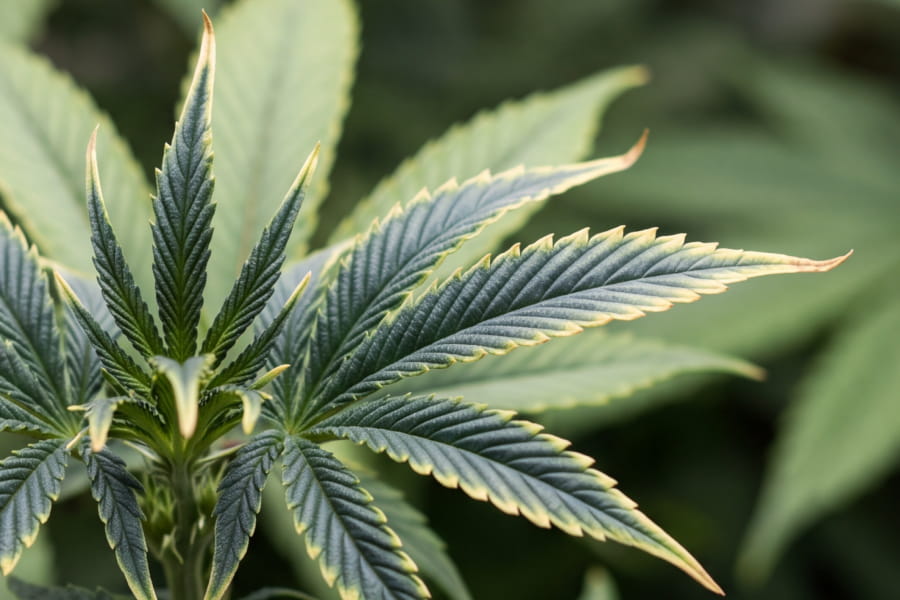
Copper deficiency in cannabis appears first on the young upper leaves, where the tips and margins discolor while the inner leaf darkens. Copper is a low-mobility nutrient, so the plant cannot move it from old leaves to new growth.
This means damage tends to concentrate on fresh growth near the light, and the affected leaves may not turn green again even after you fix the problem.
Because the symptoms overlap with other issues, it helps to read the pattern across leaf age and location. The three sections below break the signs into where and how they show up:
- Young leaves: the earliest and most reliable copper signal, seen on fresh top growth
- Whole plant and buds: wilting, curling, and stalled ripening in flower
- Copper spots and sheen: the darkened patches and metallic glint that make this deficiency easy to recognize
Copper Deficiency Symptoms on Young Leaves
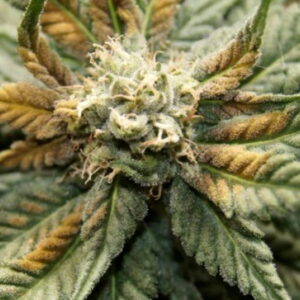
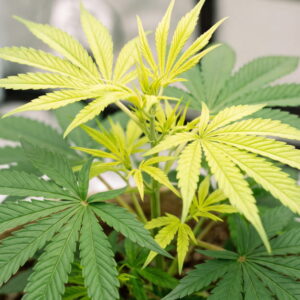
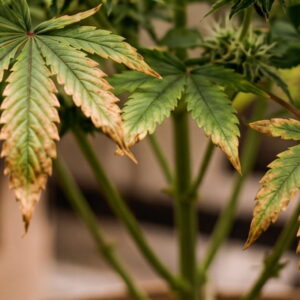
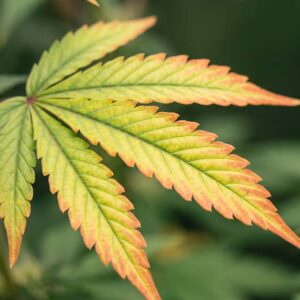
Young cannabis leaves develop yellow or white tips and margins while the rest of the leaf turns dark. The discolored edges stand out sharply against the deeper green or blue-toned center. The leaves often stiffen and begin to curl under at the edges.
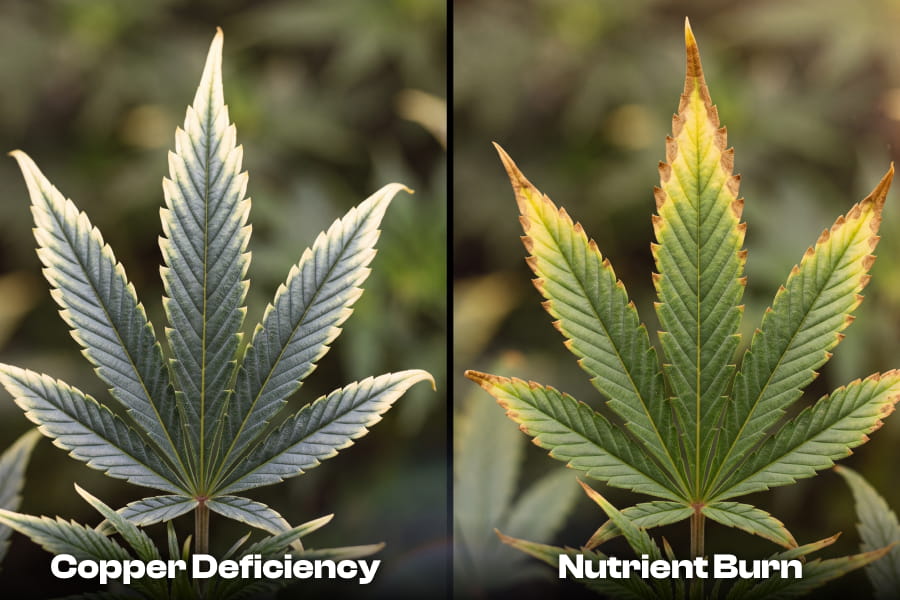
This tip-and-margin pattern separates copper deficiency from nutrient burn, which starts with yellow tips but soon turns them brown and crispy. The copper pattern keeps a pale, almost bleached look at the tips rather than a burnt one.
Copper Deficiency Symptoms on the Whole Plant and Buds
Because copper cannot travel from old tissue to new, the deficiency stays focused on the top of the plant rather than the lower leaves. What you tend to see alongside the young-leaf signs is whole-plant wilting, limp leaves that curl under and eventually die, and new shoots that struggle to open. Stems weaken and growth can turn twisted or stalled.
In flower, copper deficiency stalls bud maturation, so correcting it quickly matters most during the flowering stage. Female pistils can grow irregularly, and buds may stop ripening if the deficiency continues. Fixing the root cause early protects the harvest window.
Copper Spots and Metallic Sheen on Cannabis Leaves
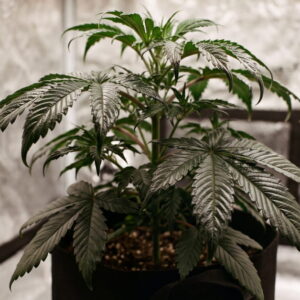
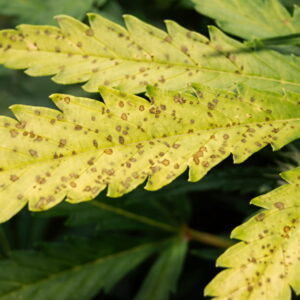
Copper spots on cannabis leaves appear as darkened patches with a metallic blue-gray or purple sheen. The affected tissue takes on an odd, almost shiny glint that catches the light. This coppery look is the most distinctive visual sign of the deficiency.
The sheen usually pairs with the yellow tips and curling described above, which makes the combination easier to identify than any single sign. When several of these signals appear together on top growth, copper deficiency moves from a guess to a confident diagnosis.

ONE KIT, FULL GROW
- Full-cycle nutrition, no guesswork
- Sweeter, more flavorful buds at flower
- Matched formulas designed to work together
- Perfect for soil, coco, and soilless media
Not sure if your plants have a copper deficiency?
Read the article Nutrient deficiencies in marijuana plants for a list with pictures of all deficiencies.
What Causes Copper Deficiency in Cannabis?
Copper deficiency in cannabis usually stems from pH lockout rather than a true lack of copper in the growing medium.
Soil, water, and most nutrient mixes already carry enough copper for a healthy plant. Media matters too: heavily peat-based or high-organic-matter mixes bind copper tightly and make it less available, while very sandy, mineral-poor substrates may simply never have had much copper to begin with.
The problem most often starts when the root zone drifts to a pH that locks copper away from the roots. The two sections below explain the mechanism and the numbers that keep copper available.
How pH Lockout Blocks Copper Uptake
When the root-zone pH drifts too high, copper binds in forms the roots cannot absorb, so the plant starves even though the copper is right there in the medium. Copper actually stays more available in slightly acidic conditions, so it’s the high side of the range that causes trouble, not the low side. This is why a pH check comes before any decision to add more copper.
Overwatering, salt buildup, and inconsistent feeding all push the root zone toward these lockout conditions, which is why steady watering and feeding matter as much as the pH reading itself.
Correct pH Range for Copper in Soil and Hydro
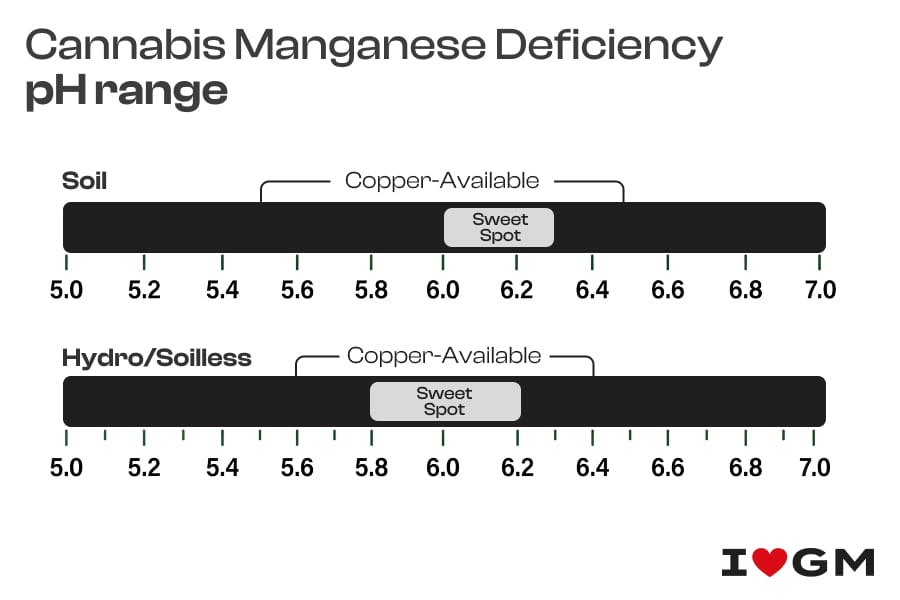
Copper stays available to cannabis roots across a soil pH of 5.5 to 6.5, with the sweet spot around 6.0 to 6.3. Soil gives you a little room to drift, but hold it in the low 6s, because once you climb past 6.3 copper and the other trace elements start locking out.
Hydroponic and soilless setups want the slightly tighter 5.6 to 6.4 band, best kept around 5.8 to 6.2. Keeping the pH inside these bands lets the roots pull copper and the other trace nutrients they need. A reliable pH meter and pH-adjusted water are the two tools that hold the range steady.

How Do You Fix Copper Deficiency in Cannabis?
You fix copper deficiency in cannabis by correcting the root-zone pH first, then restoring copper through balanced nutrients. Skipping ahead to copper before the pH is right risks tipping the plant into toxicity, since the medium usually holds enough already. The three steps below run in order, from reset to replenishment.
- Step 1 — Correct the pH: bring the root zone back into range, clearing salt buildup with a flush first only if it’s present
- Step 2 — Restore copper: feed a balanced nutrient mix so the plant can absorb copper again
- Step 3 — Copper sources: use targeted copper inputs only if a real shortage remains
Step 1 — Fix the Root-Zone pH
Start by reading both pH and EC from the runoff or reservoir, and treat each as a signal that something has drifted, not a figure to adjust toward. A high EC (well above what you fed in) means salts have built up. In that case, flush first with clean, pH-corrected water until roughly 30% drains, and correct pH afterward on the cleared baseline.
The pH correction itself depends on your medium. Because copper falls out of reach as pH climbs, you are usually lowering it, though your reading should confirm that before you act.
In coco, hydro, or synthetic-fed soil, dissolve your nutrients into the water and bring that solution into range with pH Down (or pH Up if the reading sits low) before feeding.
Organic, living soil sets its own pH biologically, so there you leave the water be and walk a real drift back down with a slow amendment such as elemental sulfur.
If the medium is clean and the reading already sits in range, copper isn’t locked out at all and the shortage is genuine, so go straight to Step 2.
Step 2 — Restore Copper With Balanced Nutrients
Balanced cannabis nutrients restore copper alongside the other trace elements a plant needs. A complete micronutrient feed delivers copper in the small, steady amounts the plant absorbs best. This approach corrects the deficiency without pushing copper toward toxic levels.
Feeding a full-spectrum nutrient line also prevents the next trace-element shortage from appearing. Follow the product’s dosing guidance and adjust to the plant’s stage rather than overloading a single element.
Step 3 — Copper Sources and Foliar Options
Copper sources such as copper sulfate, chelated copper, kelp, and compost replenish the micronutrient when a genuine shortage remains after the pH fix. Copper fungicides that contain copper sulfate or chelated copper can be applied as a foliar feed to the leaves. Natural inputs like greensand, kelp, and compost add copper more gradually through the soil.
Use these targeted sources sparingly, because copper moves from deficient to toxic across a narrow margin.
How Do You Prevent Copper Deficiency in Cannabis?
Copper deficiency is easy to keep at bay: hold the root-zone pH steady and feed a balanced nutrient line. Check pH at every watering or feeding and correct drift before it reaches the lockout zone.
Because most soil and nutrient lines already carry the trace copper a plant needs, you rarely have to supplement it directly. Avoid overwatering and salt buildup, both of which nudge the root zone toward lockout.
Early detection and a stable environment keep the deficiency from ever taking hold.
Is Copper Toxicity as Dangerous as Copper Deficiency?
Yes, copper toxicity harms cannabis quickly because excess copper blocks the plant’s ability to use iron (Fe). Too much copper causes the leaves to yellow, drives abnormal root growth, and leads to root decay. A plant pushed into severe copper toxicity can decline very fast.
Because excess copper locks out iron, copper toxicity often shows up looking like an iron deficiency: yellowing that tempts growers to feed more, which only deepens the real problem. Stay proactive at the first sign of any copper problem, and correct the cause rather than adding more copper by reflex.
How Copper Deficiency Compares to Other Cannabis Leaf Deficiencies
Copper deficiency shares its pH-lockout roots and yellowing symptoms with several other cannabis trace-nutrient problems. Reading the pattern by leaf age and location is what separates one micronutrient issue from another, since many of them start with discoloration on new or old growth. A pH check is the common first move across nearly all of them.
Because copper toxicity blocks iron uptake, copper and iron problems often look tangled together, and sorting out iron deficiency is a natural next step after ruling out copper. New growth that yellows while veins stay green points more toward zinc deficiency, especially when leaves also come in small or bunched.
Older-leaf yellowing with reddened edges tracks closer to molybdenum deficiency, while twisted, brittle new shoots with brown spots line up with boron deficiency.
Matching the exact symptom pattern to the right nutrient keeps you from dosing the wrong element.
How Strong Genetics Reduce Nutrient-Deficiency Risk in Cannabis
Vigorous, stable cannabis genetics give plants the resilience to withstand minor trace-nutrient swings before they become visible problems. A healthy seedling from a reliable source establishes strong roots that hold pH and uptake steadier through the grow. Starting from quality marijuana seeds sets that baseline of vigor that makes copper and other micronutrient issues far less likely to take hold.
Feminized cannabis seeds grow into all-female, bud-producing plants, so every plant you feed and monitor is one that earns its place in the garden, no wasted effort on males you would later cull. Autoflower seeds flower on their own schedule without light changes, which makes them a good choice for growers who want a lower-maintenance path from seed to harvest.
Either seed type pairs strong genetics with the steady root-zone management that keeps trace nutrients flowing.
Frequently Asked Questions About Cannabis Copper Deficiency
What Does Copper Deficiency Look Like on Cannabis Leaves?
Copper deficiency looks like yellow or white leaf tips and margins on young top growth, with the inner leaf darkening to a blue or purple tone. The affected leaves often carry a shiny, metallic sheen and may curl under at the edges. The pattern shows first on new growth because copper does not move easily through the plant.
Is Copper Deficiency Common in Cannabis?
Copper deficiency is one of the least common nutrient problems in cannabis. Most soil, water, and nutrient mixes already contain enough copper for a healthy plant. When it does appear, a pH imbalance in the root zone is the usual reason rather than a true shortage.
Can You Fix Copper Deficiency With Pennies or Copper Coins?
Soaking copper coins (dimes and quarters are mostly copper) in water does release usable copper, and some growers irrigate with it. An acidic solution, diluted pH Down, a potassium-based fertilizer, lemon juice, or vinegar, speeds up how fast the coins release copper, which makes the uncontrolled-dose problem even more pronounced rather than easier to manage.
Pennies, mostly zinc, will not work. The dependable fix is correcting root-zone pH and feeding a balanced micronutrient line.
How Is Copper Deficiency Different From Other Cannabis Leaf Deficiencies?
Copper deficiency stands out through yellow tips and a metallic sheen on young leaves, unlike the vein-focused or older-leaf patterns of other shortages. Most micronutrient deficiencies share a pH-lockout cause, so a pH check comes first in every case. Matching the exact symptom location and color to the nutrient prevents treating the wrong problem.
Will Cannabis Leaves Recover After Fixing Copper Deficiency?
Leaves already damaged by copper deficiency may not turn green again, because copper is a low-mobility nutrient. The important sign of recovery is healthy new growth once the root-zone pH and copper levels are corrected. Fresh leaves that emerge clean confirm the deficiency has stopped spreading.
Thanks for reading. Please leave comments or questions below and don’t forget to download my free grow bible

Misspelling at end of article; Remember that plants with strong genetics have less change of getting sick. – change or chance?
You are right, chance it is!
gettoplumber,
Copper oxidizes. I do not want chemical changes going on in my soil Why do you think they soaked it?
If you really want support for your grow; Join our support forum. There you can post a pik. This is a blog and not meant for ongoing grow support. We have many helpful members in the forum and grow experts too. 🙂
Mr Latewood,
you stated not to use real copper wire, why not?, if I left them in for about a week and then pulled them out would that be enough for the plants to absorb? I would post a pic but not sure how to do this here. this way you could see what is going on
thank you for your advise!!!
Mr. Latewood,
Chelated copper? haven’t heard of that, lol and i’m a plumber, it says to soak quarters and or dimes but for how long, and how much, and is one app enough?
Please elaborate on this Chelated copper Please, where to get it, how much to use ,and for how long, how often?
gettoplumber,
I would not advise putting Copper wire in your soil.
I use chelated Copper to deal with Copper deficiencies but, I have never had this happen. You only need a tiny bit.
this says to fix copper deficiencies by soaking quarters and or dimes in water, but for how long and can you put copper wire in the soil with the plants will do the same thing?
[…] your plant has too much molybdenum, on the other hand, it could be mistaken for a lack of iron or copper. Not sure if your plants have a molybdenum deficiency? Read the article Nutrient deficiencies in […]
[…] occur in small amounts, especially when compare to the macronutrients. Micronutrients include zinc, copper, iron, boron, manganese, and molybdenum. We’ll go into greater detail on exact nutrient […]
hi! i am at the job atm so i did not have time to read all of the article, hevweor i do enjoy the stuff i read and i will read a little more at your web site when i get home.. I got a a bounch of stuff to finish at work do you happen to have a username on facebook? =) Thank you, Resor Till Los AngelesVA:F [1.9.17_1161]please wait…
[…] are the effects and the results of the deficiencies of Zinc (Zn) and Copper ( Cu). More on micronutrients […]
[…] Pingback: Stop Copper Deficiencies In Marijuana Plants Now! […]
[…] Copper deficiency […]