

Jenny Kush is a sativa-leaning hybrid cannabis strain known for uplifted, relaxed and happy effects, a sweet citrus-and-berry flavor, and a charitable namesake that gives the cultivar its story.
Its genetics, caryophyllene-led terpene profile, and reported potency in the high-20s to low-30s THC shape a daytime-friendly high that lifts the mood before easing into calm. Jenny Kush originated as regular seed, with phenotype expression varying by breeder, grower experience and growing environment.
Here are some amazing seed deals. Buy 10 and get 10 seeds for free!
What Is the Jenny Kush Strain?
Jenny Kush is a sativa-leaning hybrid cannabis strain with a charitable namesake, classic bag appeal, and a sweet, citrus-forward profile. Its sativa-dominant genetics give it a high that lifts the mood without pinning most users to the couch.
Rare Dankness Seeds bred the cultivar in memory of Jenny Monson, a cannabis activist who died in 2013, and routed proceeds toward the Jenny Kush Foundation supporting her children.
The strain reads as a daytime-leaning hybrid in most reports, pairing a cerebral lift with a warm body calm. Consumers reach for Jenny Kush when they want balanced effects, a recognizable sweet-citrus taste, and buds with strong visual appeal. Its reputation rests less on extreme potency and more on a well-rounded, sociable experience that suits a range of tolerance levels.
Jenny Kush seeds are commonly produced in regular form, with female expression and phenotype character varying by breeder and grow setup.
Jenny Kush Strain Quick Facts
Here’s Jenny Kush at a glance, from genetics and potency to flavor, terpenes and grow difficulty.
| Property | Value |
| Strain name | Jenny Kush |
| Type | Sativa-leaning hybrid |
| Ratio | Sativa-dominant (often listed as balanced) |
| Genetics | Amnesia Haze × Rare Dankness #2 (Rare Dankness Seeds) |
| THC range | Commonly listed around 26–30% THC |
| CBD range | Less than 1% |
| Other cannabinoids | CBG around 2% |
| Main effects | Uplifted, relaxed, happy, euphoric, creative |
| Flavor | Sweet, blueberry, citrus, lemon, herbal pine |
| Aroma | Earthy, floral, lemon, sweet-fruity |
| Dominant terpenes | Caryophyllene, terpinolene, humulene |
| Flowering time | 8–10 weeks indoors |
| Grow difficulty | Easy to moderate |
| Best environment | Warm climate, indoor or outdoor |
| Seed availability | Regular, plus feminized and autoflower |
Is Jenny Kush Indica or Sativa?
Jenny Kush is best understood as a sativa-leaning hybrid. The breeder lists it as sativa-dominant, though many retailers tag it as balanced, so the high blends a strong cerebral lift with a relaxed body feel rather than tipping fully either way.
That character traces directly to its parents, pairing the sativa energy of Amnesia Haze with the indica weight of Rare Dankness #2.
The plant structure reflects its sativa-leaning genetics, growing on a sturdy frame while stretching quickly once flowering begins. In practice, the effects lean daytime-friendly, giving an upbeat head change before settling into calm rather than sedation. Most consumers find it flexible enough for either a productive afternoon or an unwinding evening.
Classification can vary by breeder, phenotype and source, so sativa-leaning works as a general guide rather than an exact prediction of effects.
Jenny Kush Genetics and Lineage
Jenny Kush descends from Amnesia Haze and Rare Dankness #2, with reported lineage tracing through Rare Dankness Seeds and phenotype variation depending on source. The breeder created the strain to honor cannabis activist Jenny Monson after her death in 2013.
Some sources note speculation around the exact parentage, but the Amnesia Haze and Rare Dankness #2 cross is the version commonly listed across major databases. The cultivar’s origin story remains a defining part of its identity.
From Amnesia Haze, Jenny Kush inherits an award-winning sativa influence: a long-lasting, uplifting head high and a vigorous, productive grow. Rare Dankness #2 contributes the indica side, a potent, stress-easing heaviness that grounds the cerebral lift.
The result is a cultivar that expresses both parents clearly rather than burying one under the other. Phenotype expression depends on the grower and the seed source, and a few traits commonly surface across reports:
- A balanced cerebral-to-body effect curve drawn from both parents
- Heavy resin production prized by hash makers
- Olive-green buds with purple undertones and a thick trichome coat
Jenny Kush genetics shape its plant structure, flowering time, resilience and aroma, though the exact results depend on phenotype, environment and grower experience.
Because the strain circulates in regular form, growers who want predictable female plants often turn to feminized seeds as a buyer-fit alternative, and ILGM stocks balanced hybrids in that format for growers who prefer to skip the sex-sorting step.
Jenny Kush THC and Cannabinoid Profile
Jenny Kush is commonly listed in the high-20s to low-30s, often around 26 to 30% THC, with exact potency depending on phenotype, grow conditions, harvest timing, curing and testing source. Some listings report lower figures, which is normal for a strain whose tested results shift between growers and samples.
CBD stays under 1%, so the cultivar’s character comes from THC and its terpene companions rather than from any meaningful CBD presence.
Alongside THC, Jenny Kush carries a small CBG presence reported around 2%, a minor cannabinoid that appears in the strain’s lab-style data. The overall profile reads as a high potency hybrid that delivers a noticeable, balanced high rather than a one-note knockout.
| Cannabinoid | Range | Notes |
| THC | Around 26% | Commonly listed; varies by phenotype and testing source |
| CBD | Less than 1% | Low; not a CBD-forward strain |
| CBG | Around 2% | Minor cannabinoid reported in available data |
Beginners or low-tolerance consumers should approach high-THC batches carefully because reported strength can vary between growers and samples.

What Are the Effects of the Jenny Kush Strain?
Jenny Kush is commonly reported to feel uplifted, relaxed and happy, with an experience usually described as balanced and daytime-friendly. The onset often takes a few puffs to arrive, then opens with a cerebral rush that brightens the mood and sharpens focus.
As the head high settles, a warm, fuzzy calm spreads through the body, easing tension without forcing most users into full sedation.
That arc makes the strain flexible across the day. Many consumers describe an energizing, wake-and-bake quality in the early hours, while others save it for the evening to decompress after a long day. Its sativa-forward genetics keep the cerebral and body phases in conversation rather than letting either run away.
Commonly reported effects cluster around a few consistent themes:
- Uplifted and happy — an early mood lift that suits social or creative time
- Relaxed — a body calm that arrives later and rounds off the high
- Euphoric and creative — a cerebral brightness some users channel into tasks
Because reported THC can run high, beginners should pace themselves, since stronger batches can feel intense before the balanced character settles in. Jenny Kush tends to suit consumers who want a sociable, versatile hybrid rather than a purely sedating nightcap.
| Effect | Intensity | Best Time | Notes |
| Uplifted | Medium to strong | Day | Early cerebral lift that brightens mood |
| Relaxed | Medium | Day or evening | Warm body calm that follows the head high |
| Happy | Medium to strong | Day | Sociable, upbeat character |
| Euphoric | Medium | Day | Cerebral brightness, often creative |
Jenny Kush Side Effects and Beginner Caution
Jenny Kush may cause dry mouth, dry eyes and occasional anxiousness in some users, especially those new to high-THC cannabis. These are the most commonly reported reactions and tend to be mild, since cannabinoids reduce moisture in the salivary glands and tear ducts.
A glass of water before and during use usually keeps the dry-mouth and dry-eye effects manageable.
A smaller number of reports mention brief dizziness, a temporary headache, or a touch of paranoia when the dose runs high. These tend to surface with overconsumption rather than moderate use, which is why pacing matters with a strain that can test near 26% THC.
Like many high-THC strains, Jenny Kush may cause dry mouth, dry eyes or an uncomfortable experience for users with low tolerance.
Jenny Kush Flavor and Aroma
Jenny Kush flavor is usually described as sweet blueberry and citrus with herbal-pine notes, while the aroma carries earthy floral and zesty lemon character.
On the inhale, the taste leans toward candied blueberry and orange, a sweetness that defines the strain’s first impression. The exhale shifts toward herbal and floral tones that resolve into a refreshing pine finish, giving the smoke a layered, dessert-meets-forest quality.
Some databases also tag the flavor with apricot and a subtle nutty note, which fit the sweet-fruit-and-herb direction the cultivar runs in. The overall taste profile is approachable rather than harsh, which adds to its sociable reputation.
The aroma sits close to the flavor but adds its own edges. Before grinding, the buds give off a sweet, fruity scent reminiscent of ripe blueberries and oranges layered over damp earth. Broken apart, a spicier, more tropical bouquet emerges, with floral and zesty lemon notes rising as the nugs are handled. That earthy-floral base keeps the sweetness grounded rather than candy-like.
Against similar sweet hybrids, Jenny Kush stands out for pairing its fruit-forward taste with a genuinely earthy, peppery undertone rather than pure sugar.
Jenny Kush Terpenes
Jenny Kush terpene profile is commonly associated with caryophyllene, supported by terpinolene and humulene. Caryophyllene sits as the dominant terpene, the spicy, peppery compound that explains the strain’s earthy, slightly sharp edge beneath the sweetness. It is the same terpene that gives black pepper its bite, and it anchors the aroma’s grounded, spicy side.
Terpinolene comes next, bringing a fruity, fresh quality that lines up with the blueberry-and-citrus flavor reports. Humulene rounds out the trio with a hoppy, herbal note that reinforces the pine and floral tones on the exhale. Together, these three terpenes map cleanly onto what consumers taste and smell.
| Terpene | Aroma / Flavor | Prevalence |
| Caryophyllene | Spicy, peppery, earthy | Dominant |
| Terpinolene | Fruity, fresh | Supporting |
| Humulene | Hoppy, herbal | Supporting |
Lab percentages vary by source, so this profile reflects the commonly reported terpene order rather than exact figures from a single test.
What Does Jenny Kush Look Like?
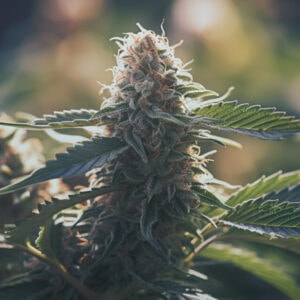
Jenny Kush buds are usually described as small, grape-shaped and dense, with olive-green color, purple undertones and fiery orange pistils. The nugs cluster tight and chunky, tapering toward one end, and carry rich purple hints that contrast against the green.
A superfine coat of milky white trichomes blankets each flower, often thick enough to soften the purple tones underneath.
The visual finish is classic and resinous. Bright orange hairs weave through the buds, and droplets of sticky, visible resin sit at the tips of the surrounding leaves. That heavy trichome and resin coverage is part of why growers prize the strain for hash, and it gives the flower strong shelf appeal.
Growing the Jenny Kush Strain
Jenny Kush grows as an easy-to-moderate cultivar suited to warm climates, reaching around 5 ft. (1.52 m) with an 8-to-10-week indoor flowering window. Its stalks are thick and sturdy like an indica, which keeps the plant resilient, and it shows good resistance to mold.
The main complication is that the strain is commonly available in regular form, so a portion of any batch will come up male.
Growers manage that sex uncertainty with simple, well-known techniques rather than complex protocols. The plant stretches quickly once flowering starts, so indoor growers with limited height often shorten the vegetative phase to keep it in check. Yields land on the generous side both indoors and outdoors, rewarding the extra planning the regular seeds require.
A few traits define the grow at a glance:
- Difficulty: Easy to moderate, mostly due to regular-seed sex sorting
- Height: Around 5 ft. (1.52 m), with a fast-flowering stretch
- Resilience: Sturdy structure with reported mold resistance
- Yield: Above-average indoors and outdoors
Jenny Kush originated as regular seed through Rare Dankness, while feminized versions and autoflower seeds have since come from other producers, so growers can pick the format that best suits their setup, experience level and harvest goals.
Growing Jenny Kush Indoors
Jenny Kush grows indoors with a fast flowering stretch, reaching a manageable height when the vegetative phase is kept short and finishing in roughly 8 to 10 weeks.
Indoor growers typically see above-average returns, with reported harvests around 12 to 14 oz/m² (340 to 400 g/m²) under solid conditions. Training methods such as Sea of Green or Screen of Green can push yields higher and tighten the canopy.
Because the plant stretches early in bloom, airflow and height planning matter most in the first flowering weeks. Its sturdy indica-like frame handles light training well, which helps growers shape the canopy without stressing the plant.
Growing Jenny Kush Outdoors
Jenny Kush grows outdoors in warm climates, with harvest usually in mid-to-late October and a mature height around 5 ft. (1.52 m). In the Northern hemisphere, plants finish from the second to the last week of October, making a warm, stable late season the ideal setting.
Each plant is a vigorous yielder, commonly producing at least 14 oz (400 g/m²) of frosted buds per plant once ready for harvest.
The strain’s mold resistance helps in the damp stretch of early autumn, though growers in wetter regions should still watch humidity as the dense buds fill in. A sunny, sheltered spot suits its quick flowering stretch and supports the heavy resin production the cultivar is known for.
Jenny Kush Seeds
Jenny Kush has historically circulated as regular seed through Rare Dankness Seeds, so a standard batch produces both male and female plants. Growers either sex the plants as they develop and remove the males, or start from feminized seed to skip the sorting altogether. Seed type, pack size and grow setup all affect flowering time and yield.
Browsing the broader range of marijuana seeds at ILGM helps growers see how a balanced hybrid like this one fits alongside other cultivars.
Originally a regular-seed release from Rare Dankness, Jenny Kush now turns up in feminized and autoflower versions from other producers, with pack size, flowering time, yield and grow difficulty shifting by format to suit different setups, climates and grower experience levels.
Jenny Kush vs Similar Strains
Compare Jenny Kush with similar strains if you want a different effect profile, flavor direction, potency level, genetic background or growing behavior.
| Strain | Best For | Main Difference | Flavor | Potency | Choose This If |
| Amnesia Haze | Daytime energy | More sativa lift, longer high | Citrus, earthy, spicy | High | You want the energetic parent’s cerebral push |
| Rare Dankness #2 | Stress relief | Heavier indica weight | Earthy, sweet | Mid to high | You want the indica parent’s grounding calm |
| Blue Dream | Balanced daytime use | Smoother, berry-forward hybrid | Sweet berry | Mid to high | You want a balanced hybrid with a softer onset |
| Granddaddy Purple | Evening relaxation | Indica-dominant, more sedating | Grape, berry | High | You want purple-hued buds and a heavier body calm |
FAQs About Jenny Kush Strain
What Is the Jenny Kush Strain?
Jenny Kush is a sativa-leaning hybrid cannabis strain bred by Rare Dankness Seeds from Amnesia Haze and Rare Dankness #2. Named for activist Jenny Monson, it pairs an uplifting cerebral high with a relaxed body calm, sweet citrus-and-berry flavor, and resin-rich buds that growers prize for hash.
Is Jenny Kush Indica or Sativa?
Jenny Kush is a sativa-leaning hybrid, though some sources label it a balanced 50/50. The sativa side edges ahead, so the high opens with a cerebral lift before settling into a relaxed body feel. Classification can shift by breeder and phenotype, so sativa-leaning works as a general guide rather than a guarantee.
How Strong Is Jenny Kush?
Jenny Kush is commonly listed around 26 to 30% THC, placing it firmly in the high-potency range, though some samples test lower. CBD stays under 1%. Because reported strength varies by grower and testing source, beginners and low-tolerance consumers should start slow with stronger batches.
What Are the Effects of Jenny Kush?
Jenny Kush is commonly reported to feel uplifted, relaxed, happy and euphoric, with a creative edge early on. The high opens cerebral and bright, then settles into a warm body calm. Many describe it as balanced and daytime-friendly, suiting both productive mornings and unwinding evenings.
What Does Jenny Kush Taste Like?
Jenny Kush tastes sweet and fruit-forward, leading with candied blueberry and orange on the inhale. The exhale turns herbal and floral with a refreshing pine finish. Some sources also note apricot and a subtle nutty tone, keeping the overall flavor layered and approachable.
What Does Jenny Kush Smell Like?
Jenny Kush smells sweet and fruity before grinding, with ripe blueberry and orange over damp earth. Broken apart, the aroma turns spicier and more tropical, with floral and zesty lemon notes. The earthy-floral base keeps the sweetness grounded rather than candy-like.
What Are the Genetics of Jenny Kush?
Jenny Kush descends from Amnesia Haze and Rare Dankness #2, bred by Rare Dankness Seeds. Amnesia Haze contributes the uplifting sativa lift and vigorous grow, while Rare Dankness #2 adds indica weight and resin. Some sources debate the exact parentage, but this cross is the commonly listed lineage.
What Terpenes Are in Jenny Kush?
Jenny Kush is most associated with caryophyllene, the spicy, peppery dominant terpene, followed by terpinolene and humulene. Terpinolene adds a fruity freshness that matches the berry-citrus flavor, while humulene brings a hoppy, herbal note. Together, they explain the strain’s sweet-yet-earthy aroma and taste.
Is Jenny Kush by Aeriz the Same Strain?
Yes, a Jenny Kush product sold by a licensed producer such as Aeriz refers to the same cultivar described here, grown and packaged for a specific legal market. Genetics, effects and flavor track the same Amnesia Haze and Rare Dankness #2 lineage, though exact THC figures vary by batch and grower.
Where Can You Find Jenny Kush?
Jenny Kush appears as packaged flower through licensed producers in some legal markets and as seeds through breeder channels for home growers. Availability shifts by region and season, so the cultivar’s effects, flavor and genetics stay consistent even when local stock and specific producers change.
How Long Does Jenny Kush Take to Flower?
Jenny Kush usually flowers in 8 to 10 weeks indoors, with outdoor harvest in mid-to-late October; grow-from-seed expectations and seed-type timing differences vary by setup and phenotype. Sea of Green or Screen of Green methods can tighten the canopy and may shorten the indoor window slightly.








Just found a seed waiting on my soil to come in I’ll stay in touch
Feminized seeds will ruin the genetics of Cannabis!