
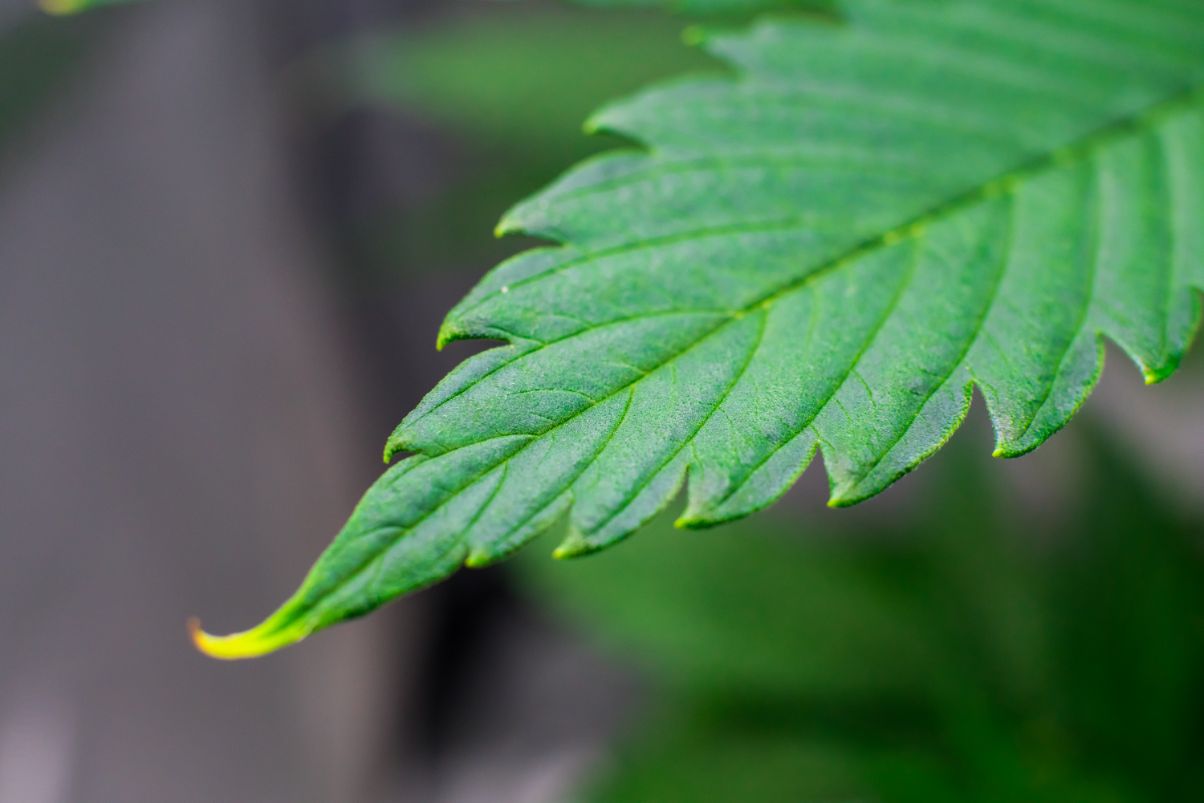
Cannabis nutrient burn scorches your leaf tips when the roots take in more nutrients than the plant can use. It shows up as yellow or brown crispy tips that curl and turn brittle, and it’s one of the most common problems new growers face.
The good news is that it’s easy to spot once you know the signal, and mild cases recover well. This guide shows you how to identify nutrient burn, tell it apart from deficiency and light burn, fix it at any growth stage, and help your plants bounce back.
The quick answer: crispy and curling leaf tips almost always mean overfeeding. Flush the medium with clean, pH’d water until a good amount drains from the bottom, then cut your next feed — new growth recovers even though the burnt leaves won’t.
What Is Cannabis Nutrient Burn?
Cannabis nutrient burn is the leaf damage that appears when roots absorb more nutrients than the plant can process. Growers also call it “nute burn,” and it’s one of the first problems most new growers run into. The excess builds up faster than the plant uses it, so the leaf tissue at the tips dries out and dies.
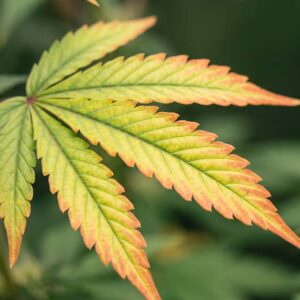
The damage starts at the leaf tips and spreads inward toward the stem. Tips turn yellow first, then brown and crispy, and the edges can curl as the burn deepens. Catching it early keeps the problem contained to a few leaves instead of the whole canopy.
What Does Cannabis Nutrient Burn Look Like?
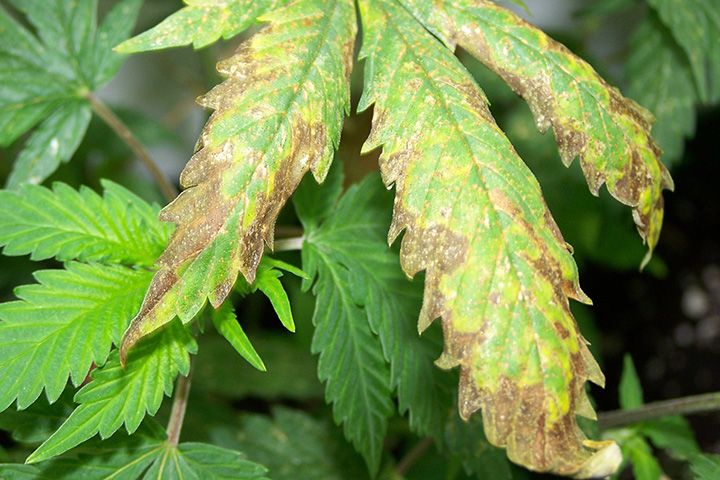
Cannabis nutrient burn shows first as yellow or brown tips on the leaf points, which curl and dry out as the damage spreads inward. The scorched tips look burnt and feel dry and brittle, almost like paper. As it worsens, the brown creeps from the tip toward the base and the leaf edges twist.
Crispy, curling tips signal the difference between burn and most other problems, and they tend to show up on the fastest-growing leaves first, since new top growth pulls in nutrients fastest.
Use the checklist below to confirm what you’re looking at.
| Symptom | What it points to |
| Brown, crispy tips, dry and paper-like | Classic nutrient burn |
| Damage starting at tips, spreading inward | Nutrient burn (not deficiency) |
| Leaf edges curling or clawing | Overfeeding, often excess nitrogen |
| Tips burnt on the newest top leaves | Active, ongoing burn |
| Slowed growth alongside burnt tips | Nutrient overload stressing the plant |
Nutrient Burn vs Deficiency: How to Tell Them Apart
Nutrient burn and nutrient deficiency produce opposite leaf signals, so reading the pattern tells you which one you have. Burn scorches the tips and margins because the plant has too much feed. Deficiency drains color from the whole leaf, the veins, or the older growth because the plant has too little of a nutrient.
The location of the damage is your most reliable clue. Burn attacks the tips of the fastest-growing leaves, while many deficiencies show up first on older lower leaves as broad yellowing or interveinal fade. The table below ranks each signal by how much you can trust it.
| Trait | Nutrient Burn | Deficit Sign | Trust Factor |
| Damage location | Leaf tips first, can spread inward | Whole leaf, veins, or margins | High |
| Color pattern | Brown, scorched tips | Even yellow leaves or vein fade | High |
| Tip direction | Tips dry, crispy, and brittle | Tips may droop or stay flat | Medium |
| Position on plant | Fastest-growing top tips | Often older lower leaves first | Medium |
| Cause | Too much feed | Too little of a nutrient | High |
Some cases overlap, which is where growers get stuck. A potassium deficiency can brown the leaf edges in a way that mimics burn, and a calcium deficiency often shows brown spots that get mistaken for it too.
When the whole leaf yellows instead of just the tips, the cause is more likely a nitrogen deficiency or a magnesium deficiency, since those drain color from the leaf body rather than scorching the edges.
Light Burn vs Nutrient Burn: What’s the Difference?
Light burn and nutrient burn damage leaves in different places, so the location tells you which one you’re dealing with. Light burn bleaches and yellows the top canopy nearest the lamp, while nutrient burn scorches leaf tips throughout the plant. Light burn comes from a grow light held too close or run at too high an intensity, not from anything at the roots.
The tell with light burn is that it tracks the light, not the veins or tips. Leaves directly under the lamp fade or bleach while shaded lower leaves stay green and healthy.
If you raise the light or dim it and the top-canopy fade stops spreading, you were dealing with light burn rather than a feeding problem.
What Causes Cannabis Nutrient Burn?
Cannabis nutrient burn results from an oversupply of nutrients at the roots, most often from overfeeding, hot soil, or a specific nutrient imbalance. The plant can only take up so much before the excess starts scorching tissue. Three causes drive nearly every case.
- Overfeeding and bottled nutrients: the most common trigger, from adding more feed than the plant’s stage needs.
- Nitrogen toxicity: a distinct pattern caused by too much nitrogen.
- Hot soil: pre-fertilized growing medium that overloads young roots.
Overfeeding and Bottled Nutrients
Overfeeding causes most nutrient burn cases when growers add more bottled nutrients than the plant’s stage requires.
Vegetative and flowering plants need different nutrient ratios, and pushing a heavy dose “to be safe” overloads the roots. More feed does not mean faster growth, and a balanced dose always beats an excess.
Many nutrient brands print feeding charts that already run strong, so starting at half strength gives you a safer baseline.
Nitrogen Toxicity in Cannabis Plants
Nitrogen toxicity produces a specific burn pattern of dark green, clawing leaves with burnt tips from too much nitrogen. The leaves turn a deep, glossy green and the tips bend down and claw, which is the real signature.
Tip scorch can follow if the overload runs on, but the downward claw is what sets it apart. This usually happens in vegetative growth when a nitrogen-heavy feed runs too long into the cycle.
Note the direction: general burn claws upward, while nitrogen toxicity claws downward. Because it has its own signals and fix, nitrogen toxicity is worth diagnosing on its own when the leaves look dark and clawed rather than simply crisp.
Hot Soil and Pre-Fertilized Growing Medium
Pre-fertilized or “hot” soil delivers a heavy nutrient load that can scorch seedlings planted directly into it.
Many bagged soils come amended with enough nutrients to burn young roots that need only light feeding. Seedlings and young plants started in hot soil often show burnt tips within days, even when you have added no extra nutrients.
Starting delicate plants in a lighter, low-nutrient medium avoids the problem from the beginning.
How Do You Fix Cannabis Nutrient Burn?
You fix cannabis nutrient burn by flushing the growing medium with clean, pH’d water and cutting back the nutrient dose. Flushing washes the excess salts out of the root zone so the plant stops taking up more than it can handle. The steps differ slightly between soil, coco, and hydro systems.
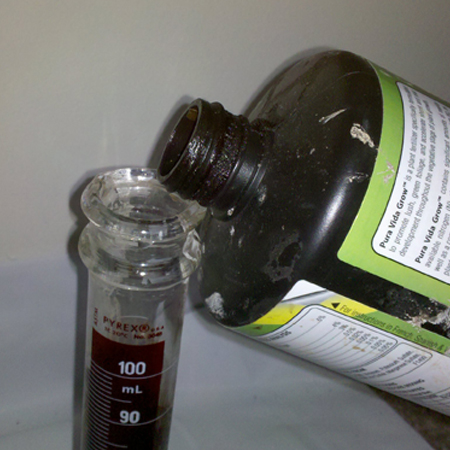
Liquid cannabis nutrients being poured into a measuring tube
to ensure accurate feeding amounts.
- Flush soil and coco: run clean pH’d water through the medium until roughly a quarter to a third of it drains out the bottom.
- Fix hydro: dilute or replace the reservoir with a weaker, balanced solution.
- Remove damaged leaves: cut the worst-burnt foliage so the plant redirects energy to new growth.
How to Flush Nutrient Burn in Soil and Coco
Flushing soil and coco clears excess salts when you run clean, pH’d water through the medium and let a good share of it drain away. Water slowly until roughly a quarter to a third of what you pour in runs out the bottom, carrying the built-up salts with it.
After flushing, hold off on feeding and let the plant use up what remains in the medium. Once new growth comes in clean, resume feeding at a lighter dose than before.
How to Fix Nutrient Burn in Hydroponics
Hydroponic plants recover from nutrient burn when you bring the reservoir strength down. Add plain pH’d water to thin the current mix, or drain it and start fresh at a lower dose. Make changes gradually in hydro, since the roots sit directly in the solution and respond fast.
A TDS meter reads the total dissolved solids in the water, a proxy for overall feed strength, and tells you whether levels are climbing or dropping each time you check.
Removing Damaged Leaves
Badly burnt leaves will not recover their green tissue, so removing the worst-damaged foliage lets the plant redirect energy toward new growth. Trim only the leaves that are mostly crispy and dead, and leave anything still partly green to keep photosynthesizing.
The goal is to help the plant move on, not to strip it bare. New leaves that come in clean after the flush confirm the burn has stopped spreading.
Will Cannabis Plants Recover From Nutrient Burn?
Yes, cannabis plants usually recover from mild to moderate nutrient burn once you flush the excess and correct the feeding. The leaves already scorched stay damaged, but healthy new growth returns as the root zone clears. Recovery depends on how severe the burn is and which growth stage the plant is in.
Mild burn on a few tips barely slows a plant down in vegetative growth. Severe, uncorrected burn stresses the plant hard and can kill it, especially late in flowering when repair capacity is low. The sooner you catch it and flush, the fuller the recovery.
If the leaves look dark green and clawed rather than simply crisp, treat it as nitrogen toxicity instead, since that has its own fix.
Nutrient Burn Across the Grow
Cannabis nutrient burn behaves differently across the grow because the plant’s nutrient tolerance shifts as it matures. A dose that a mature vegetative plant shrugs off can scorch a seedling, and the stage also decides how well the plant recovers. Fast-cycling autoflowers add their own wrinkle.
- Seedlings: the most sensitive stage, tolerating only very light feeding.
- Flowering: higher risk because the plant repairs damage slowly.
- Autoflowers: short life cycles that leave little room to recover.
Seedling Nutrient Burn
Cannabis seedlings burn easily because their small root systems tolerate only very light feeding. A seedling in plain or lightly amended medium usually needs no added nutrients for its first couple of weeks. Burnt tips on a seedling almost always mean the medium was too hot or you fed too soon. Starting seedlings on plain water and introducing nutrients slowly keeps them safe.
Nutrient Burn During Flowering
Nutrient burn during flowering carries more risk because flowering plants repair damage slowly while directing energy into buds. The closer the plant gets to harvest, the less capacity it has to recover from stress. Overfeeding late in flowering can scorch the sugar leaves around the buds and stall bud development.
Ease off nutrients as harvest approaches and flush at the first sign of tip burn to protect the flowers.
Autoflower Nutrient Burn
Autoflower cannabis plants need lighter feeding than photoperiod plants because their short life cycle leaves little time to recover from a burn. An autoflower moves from seed to harvest in weeks, so a photoperiod plant can grow past a burn that costs an autoflower real yield.
Feed autoflowers at a fraction of the strength you would give a photoperiod plant, and watch the tips closely. Growers who want a forgiving, fast finish often start with quality autoflower seeds bred for stable, predictable growth where cultivation is lawful.
How to Prevent Cannabis Nutrient Burn
You prevent cannabis nutrient burn by feeding at or below label strength, checking your runoff, and starting seedlings on light nutrients. Prevention costs far less effort than fixing a burn mid-grow. A few habits keep the root zone in balance.
Start every feed at half the recommended strength and increase only if the plant shows it needs more. Check the runoff or reservoir with a TDS meter so you catch rising nutrient levels before they scorch anything. Keep your water pH’d, since off-range pH can lock out nutrients and mimic burn symptoms on its own.
If you’re feeding synthetic nutrients, pH the solution before each feed, since that’s what reaches the roots directly and off-range pH can lock out nutrients or mimic burn symptoms on its own. Organic, living soil generally buffers its own pH and doesn’t need the water pH’d the same way.
Where you grow, follow federal, state, and local cultivation laws, and match your feeding to each stage rather than pushing a constant heavy dose.
Before you flush, make sure you’re treating the right problem: a potassium deficiency can scorch both the tips and edges of lower leaves in a way that looks almost identical to burn, and a calcium deficiency shows up as brown spots on new growth rather than burnt tips.
Strong Genetics Give Plants a Better Starting Point
Cannabis plants grown from stable, high-quality genetics handle stress better than weak seed stock, which softens how hard problems like nutrient burn hit them. Strong genetics come with more consistent growth and steadier nutrient uptake, so the plant is less likely to react badly to a small feeding mistake. That resilience starts at the seed.
Growers who buy marijuana seeds from a trusted seed bank get a healthier, more predictable foundation to work from. For beginners who want certainty about growing flower-producing plants, feminized cannabis seeds reduce male-plant guesswork and keep the focus on plant care where cultivation is permitted by law.
FAQ About Cannabis Nutrient Burn
What Is Cannabis Nute Burn?
Cannabis nute burn is leaf damage that appears when the roots absorb more nutrients than the plant can use. It scorches the leaf tips brown and crispy and spreads inward if left uncorrected.
Can Nutrient Burn Kill Your Cannabis Plant?
Yes, severe and uncorrected nutrient burn can kill a cannabis plant, especially late in flowering when its capacity to recover is low. Mild to moderate burn rarely kills a plant once you flush the medium and cut back feeding.
How Do You Fix Nutrient Burn Immediately?
You fix nutrient burn fastest by flushing the growing medium with clean, pH’d water and holding off on the next feed. Trim the worst-burnt leaves so the plant can put its energy into fresh growth.
How Do You Flush Nutrient Burn?
Flush nutrient burn by running clean, pH’d water through the medium until roughly a quarter to a third of it drains from the bottom. The runoff carries the excess salts out of the root zone, and you resume feeding at a lighter dose once clean growth returns.
Is It Nutrient Burn or Potassium Deficiency?
Nutrient burn scorches the leaf tips from too much feed, usually showing up on newer, top growth first, while a potassium deficiency can brown both the tips and the edges of the lower leaves from too little potassium. Check the pattern alongside location: mottled red and yellow between the veins, with the veins staying green, points to a deficiency rather than straight overfeeding.
Does Nutrient Burn Happen in Hydroponics?
Yes, nutrient burn happens in hydroponics when the reservoir runs too concentrated for the plant. Correct it by diluting or replacing the solution with a weaker, pH-adjusted mix, and track the concentration with a TDS meter.
What Does Nitrogen Burn Look Like?
Nitrogen burn looks like dark green, glossy leaves with tips that claw downward and scorch at the ends. This distinct pattern points to nitrogen toxicity rather than general overfeeding.
Can Autoflowers Get Nutrient Burn?
Yes, autoflowers get nutrient burn easily and have little time to recover because of their short life cycle. Feed autoflowers at a fraction of photoperiod strength and watch the tips for early scorching.
Why Do Burnt Leaf Tips Turn Crispy?
Burnt leaf tips turn dry, brittle, and crispy because a nutrient overload stresses the tissue at the fastest-growing points of the leaf, which is why new top growth usually shows it first. That crispy, dead-tip texture, not any particular curl direction, is what separates nutrient burn from most deficiencies.
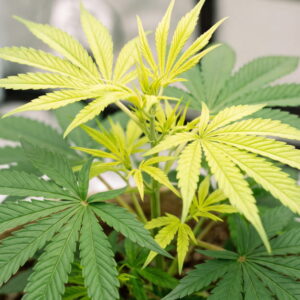
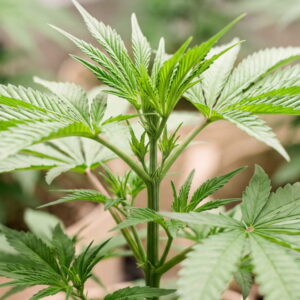
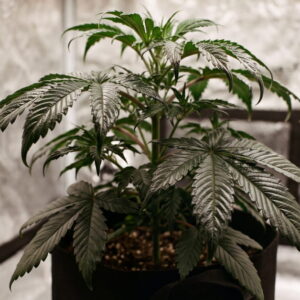
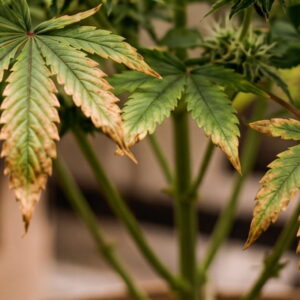
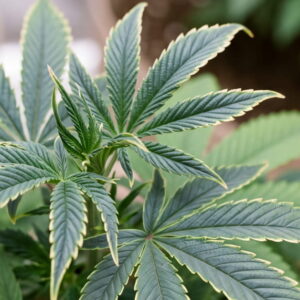
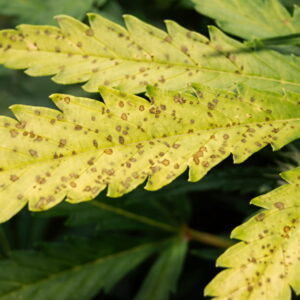
DONT just use happy frog ocean forest. It’s hot in nitrogen and will burn. I’m having this issue ?
Yeah, Ocean Forest is a little hot. Its best to avoid any additional ferts in the first couple of weeks when using it. Some people like to grow some clovers in there for a while before plant their Cannabis in it (this gets the nitrogen cycle started and helps avoid nutrient burns).
my plant is green but is turning yellow on the edges
Hi Thomas,
Thanks for your comment. It sounds like a potential potassium deficiency. What kind of nutrients have you applied exactly and how often?
Alex ILGM
Hello, im growing my plant in coco in a rootnurse pot, elevated in my greenhouse. I just got back from four days at work and all the leaves apart from the top are curling underslightly, the coco is still damp so not under watered. Fed some nutrient water before I went to work. The leaves on the bottom are yellowing and curling. Some have brown dry patches. What is the best action to take? Thank you, im a complete newb.
I am noticing what looks like light burn from an LED T5 panel. I am growing in soil and have used barely any nutrients in the soil, and it looks like light burn. I was wondering if this is an uncommon experience with these lights, as I assumed LED T5 could be close to the plants. Curious if this could be something else than light burn.
I stomped …flowering stage get white, aurora,bruce3,green crack and 3 med grafe locals all in week 2 flowering one of my locals wilted bad I flushed it trimmed her up took a week came back better and stronger, Bruce did the same never recovered great white stems to get began wirey/viney new growth was lime green and tender days later tips curled under and up burnt on tips the green crack and other locals neverhad a problem along with a purple hulk auto and 3 lsd auto never phased my ph was getting to the low side the Bruce was 4 that died the rest 5 to 6 got it back to 6.5 now please tell me what you think the loss of Bruce 3 is sickening oh im in soil all the way and one more thing the great whit is only the top sucker leaves closet to lights can some one give me some help
Should I cut off leaves with nute burn?
Just trying to recover from nute burn here today. The forum and guides are brilliant!
Will upload where possible, nursing beginner here also seeing everything I’ve read, major burn on a few strains white widow getting there but purple h, chem dog and black widow bouncing back slowly but surely I think thanks ilgm much much!!
Thanks much!!!!!!!!
I blew my first ten seeds now I have twenty more planted 8 so far I see a little nutrients burn I hope that is what it is but so far all are coming along fine the seeds are right on point this is the fifth week an everything is looking good
Exactly what my 1 plant looks like, too many nutes….Thanks Robert…you and the gang are the best
Your information is always timely and excellent. Thanks
Water temp 75. 229 ppm and 487 conductivity. On 3 in 1 meter
Sorry it’s just the tips that turn yellow and some get crispy. I want to turn to flower but waiting to fix issue first it’s getting taller. Need to change over soon.
Hydro grow super lemon haze took a long time to grow and it was doing great moved it into bigger tent 3×3 300w led was doing ok for a week or two water water fed very little nutrient organic fox farm grow big only gave 1 dropper 1ml) at a time. The tips turned yellow and some curled up and got crispy check pH everyday always between 5.5 and 6.5. Humidity about 50 temp range from 70to 85.i flushed and added a little more mutes still tips turning bright yellow even new growth. I just flushed with just pH water no nutes to see if it helps. I can’t figure it out. I read and read and what I could find is nute def but not sure. I did have a couple of older small leaves turn yellow but pretty much just the tops. Please help.
Hi everyone this is my 1st grow i have 2 chocolate chunk comin up to week 7 of flower under 3oo watt led roleado full spectrum got abit of brown tips lookin frosty and nice smell and sticky plenty of buds just there not very big wot can i do or is it too late better luck next time
If you want to get just a few seeds from your plant heres a little trick I learned.
Let a branch of one of the males grow. I keep it way away from the females. Then when it starts to pollenate I put some of it in a baggie, then I take the baggie wrap it around one branch with a rubber band blocking it from the rest. Leave it on for a few hours should be enough as the plastic can burn your plant. Just keep a close eye on it.
who knew that growing ‘weed’ would be so complicated. The other weeds in my garden do not have any problems.
Hi Larry, if you like you can check out our affiliate program. Good luck with your project! 😀
Hi Robert, love all the information I receive. *edit*
Thanks Marty. For your customer service related questions, please leave a message here
i have a bit of nute burn. i was going to flush the soil with some water as suggested here, however, do i need to be concerned with over watering the plants? They’re about 6 weeks old grown from seed?
Ace,
You need to join our support forum. We can help you there. This blog article is on nutrient toxicity but, at the forum, we have an area where we can help you out. See you there, lw
i had a problem with spider mites sprayed with organic killer know leaves are curling and under leaves there looks like little pieces off wood clinging to the veins of the leaf anybody help me please
Thank you for the info I new it wade thrips or nut berne! Yep. …
thanks
[…] is extremely common for new growers to give their plants far too many nutrients than what is necessary. They have the mindset that you can never have too much. That, […]
Out or 18 seeds only 8 are thriving. The others are dead or barely hanging on. Do you replace/refund failed seeds? tks deb
Hi Deb, sorry to hear not all of them made it, please contact our customer service At [email protected] they will take it from there.
Gary D
If you have an inline fan; You should use it to pull heat through the carbon filter, through the light, and output hot filtered air out of room. You can add a fan to draw air, but I believe a passive intake in the tent will be just fine.
For continued support; Join our grow Support forum.
Hi Nebula, thanks for letting us know, the picture was mailed by a fan/customer. I will leave your link up!
I have a Reggie seed I planted and it spurd out but the two leaves are out but not al the way out. It’s been maybe 3 weeks since it came out but the leaves seem like the yellow and won’t grow since then. What should I do? Is it that normal?
Alex,
You need to join our Support Forum. There you can add a picture, and we can give you a more informed answer anmd guidance from there. 🙂
I am using 1 400watt hps for flowering 2 plants. It is a air cool hood.when I set up my grow tent with carbon filter. Should I connect it to run through the light. I have a 6in inline fan sucking the hot air out a window.
Or should I use the blower to draw more fresh air in, and leave the inline fan to pull heat out of the light
Looking for any tips on germination. I hear Rockwood cubes are good. First time starting from seeds.
Jiffy plugs, work best…
Thanks Mr Bergman for all the tips.
I look forward to them. I got strawberry kush seeds from you awhile ago. I will be germination soon they arrived just fine. waiting for my 48×48 grow tent. So I can flower and veg in the same room.
Never realized the science behind this. I love it.
I have got one suggestion for your web site. It areapps like there are a few cascading stylesheet troubles when launching a selection of web pages within google chrome as well as safari. It is functioning okay in internet explorer. Possibly you can double check that.VA:F [1.9.17_1161]please wait…
It sounds like you’re over watering. However; Young seedlings should not be in soil with fertilizer at such a young age. I strongly advise you all to join our support forum and get assistance with your grow. 🙂
I transplanted on september 03 still waiting for the 2nd node.
my husband bought some white widow feminized seeds from you. this is are first grow ever we have planted one seed it was doing well for about 10 days now she has one of her seed leaves dieing and one of her first true leaves has had some yellowing at the tip.we havent firtilzed her yet she is about 3 inches tall havent tranceplanted her because her roots arent showing yet .she is mainly a indoor plant but we ley her outside for a couple hours twice a week. it has been about 90 degrees ferinhight .she is in mirical grow poting soil has a 15 watt led grow light and a 25 watt led regular energy efficiant bulb that says it replaces a 60 watt bulb to suplimint the grow light. the grow tent is a small tent a little over 5ft tall and 3 ft wide bace the grow ligh is 2.5 inches from the plant.no curling of the main leaves. please help us to make sure she is healthy.i need her to do well for migraine control and musle twitches and i am hoping it will help to slow or reverse a precancerous growth that i have
Not enough light. You need at least a 600w HPS light for a 4×4 Grow Tent. Or a 400w HPS for a 3×3 tent. Remember to ventilate heat. You can put about 4-6 plants under in tent 3 gallon pots (roots organics soil) and get 1-2oz each plant. For the cancer I suggest trying Rick Simpson Oil. You can find out how to make it on “youtube.com/watch?v=rbXeAJvBKXs” (remove quotes) You need about 1 lb of material to make enough 60ML of oil to start treating cancer. You need to ingest at least 1ml of day. Most take suppositories its easier and less pshycoactive. GL
‘@ Pamela,
Not enough light. You need at least a 600w HPS light for a 4×4 Grow Tent. Or a 400w HPS for a 3×3 tent. Remember to ventilate heat. You can put about 4-6 plants under in tent 3 gallon pots (roots organics soil) and get 1-2oz each plant. For the cancer I suggest trying Rick Simpson Oil. You can find out how to make it on “youtube.com/watch?v=rbXeAJvBKXs” (remove quotes) You need about 1 lb of material to make enough 60ML of oil to start treating cancer. You need to ingest at least 1ml of day. Most take suppositories its easier and less pshycoactive. GL
Miracle gro is probably killing it. Almost lost my plants to it. Switch to Fox farm ocean Forrest
I’ve been using miracle grow most of my plants life. Both spraying the leaves/buds and watering the roots almost Daily. It was really beautiful until yesterday. I made a new batch of miracle grow and water and sprayed and water my mother plant and several clones. The clones already died, I think. And mother plant looks like it was burned up. I flushed it with bottled water and brought it inside. About 68 to 70 degrees. Florescent lighting. What can I do to save it? Should I try cloning the biggest buds and how far down should I make the cut. I’m sending along a pic. And my email. Please answer ASAP. I feel like I’m losing one of my kids.
Thanks Woodrow Jones
Don’t plant seedlings in a nutrient rich soil. Seeds have what they need to grow for the first 2 weeks. Use a sterile growing medium. After 2 weeks plant into a nutrient fortified soil(preferably not miracle grow) then start feeding it nutrients a month later. Most likely, you burned your roots and stunted the plants growth. I would also recommend buying a higher powered LED. I hope this helps.
[…] be from too little (or too much) of one nutrient. There is the common identifiable problem called “nutrient burn” that shows your plants are receiving too many nutrients. Just like people shouldn’t fill their […]
[…] Nutrient burn […]