
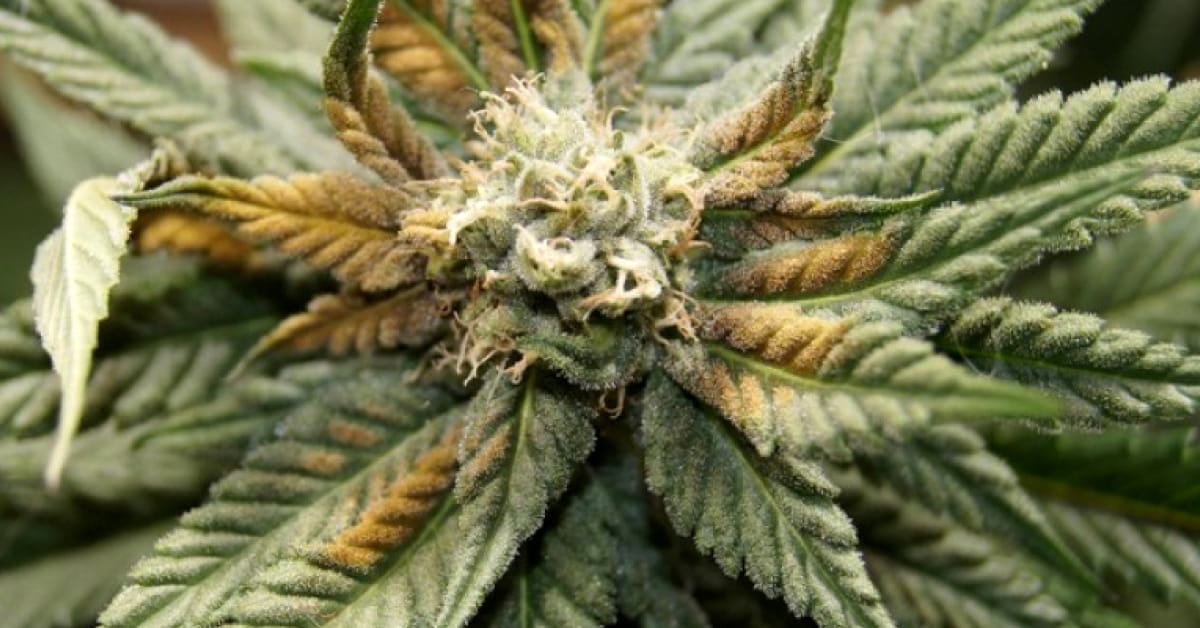
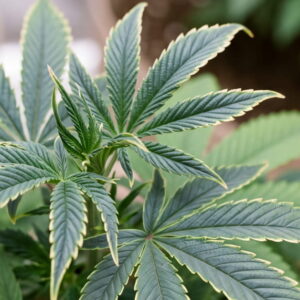
Twisted, wrinkled new leaves with dying tips and small brown spots on the newest growth usually point to a boron deficiency, especially when the lower leaves still look fine. Because boron barely moves once it’s inside the plant, a shortage always hits new growth first.
Here’s the part most growers miss: before you reach for anything containing boron, check your pH. A pH problem that locks out boron is far more common than the plant actually running short of it.
This guide walks you through what a cannabis boron deficiency looks like, why it happens, how to tell it apart from a calcium deficiency, and how to bring your plant back.
What Is Boron Deficiency in Cannabis?
A boron deficiency develops when a cannabis plant can’t take up enough boron to support its newest growth.
Boron does a lot of quiet work behind the scenes: it helps the plant use calcium, drives cell division, supports pollen and seed formation, and keeps stems, stalks, and branches structurally strong. When boron runs short, the plant loses the ability to build healthy new tissue.
Two facts shape everything about this deficiency. First, boron is immobile: unlike nutrients the plant can shuffle around as needed, boron stays locked wherever it first lands, so the plant can’t rob its old leaves to rescue the new ones. Second, true boron shortages are rare, since most water sources already carry some boron.
When symptoms appear, the cause is usually something blocking uptake rather than an empty tank.
What Are the Signs of Boron Deficiency in Cannabis?
Boron deficiency announces itself in stages. The earliest signs appear in the new growth, and if the shortage goes unchecked it works its way down into the stems and roots. You’ll usually notice the symptoms in this order:
- New-growth damage — the earliest and clearest signal, seen at the very tips
- Stem and root changes — a later sign that the shortage is getting worse
- Small brown spots — the tell that separates boron from calcium
New-Growth Symptoms of Boron Deficiency
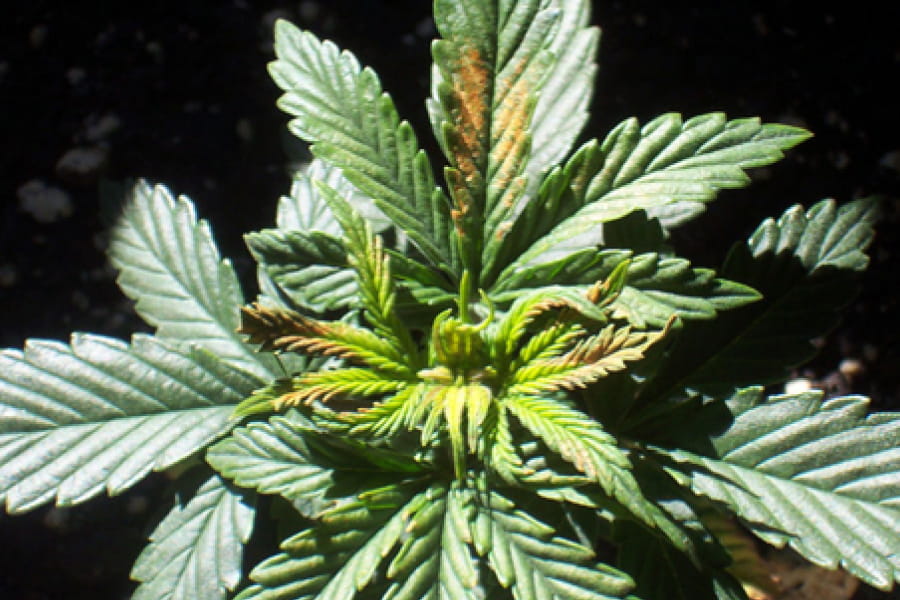
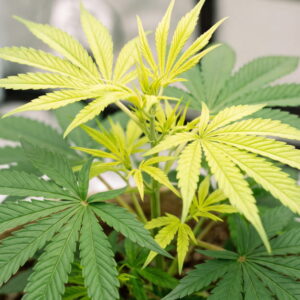
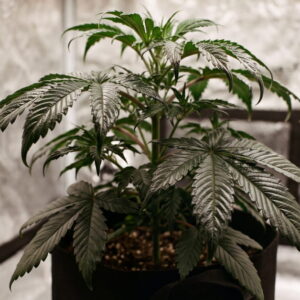
New leaves twist, wrinkle, and darken at the tips before they’ve had a chance to mature. The uppermost leaves grow abnormally or more slowly than usual, and growing tips often look twisted and start to die back.
Once those tips die, lateral shoots try to take over, but without enough boron they come in twisted, sunburned looking, and an oddly bright green, then fade too.
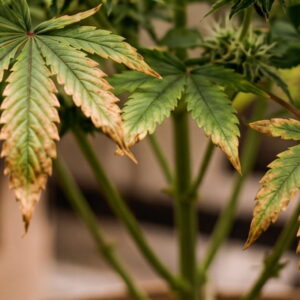
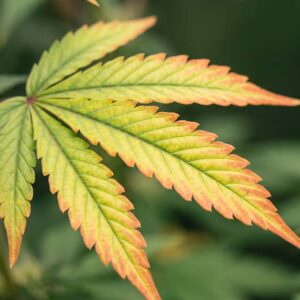
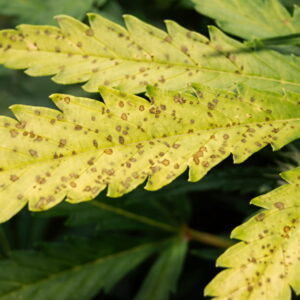
Brown, dead spots then appear on the leaves, with the surrounding tissue clearly dying alongside them. These spots run smaller than the ones a calcium problem leaves behind, which is the single most useful thing to look for.
Stem and Root Symptoms of Boron Deficiency
The stems turn rough and hollow while secondary roots swell and shorten, both signs that the shortage has moved past the leaves. Leaf stems and the main stem can hollow out and coarsen, and root growth slows or stalls.
Fragile roots in this state also open the door to fungal and bacterial infections, so a boron problem left alone can quietly become a root problem.

ONE KIT, FULL GROW
- Full-cycle nutrition, no guesswork
- Sweeter, more flavorful buds at flower
- Matched formulas designed to work together
- Perfect for soil, coco, and soilless media
What Causes Boron Deficiency in Cannabis Plants?
Boron deficiency usually traces back to pH lockout, over-fertilizing, or dry conditions rather than genuinely low boron. Chasing the symptom without fixing the cause just brings it back, so it’s worth knowing which of these is driving it:
- pH lockout — the most common culprit, and the first thing to check
- Over-fertilizing — floods the root zone and blocks uptake
- Underwatering and a dry root zone — slow the plant’s ability to draw boron up
- Water source — rarely the issue, but worth ruling out
Most boron problems start with pH drifting out of range, which stops the roots from absorbing what’s already there. Over-fertilizing is the next usual suspect, since a crowded root zone struggles to take up boron even when plenty is present.
A dry root zone and irregular watering make it worse, because boron rides the transpiration stream up through the plant, so a plant that isn’t drinking steadily can’t move boron to its new growth.
Very high humidity works against you too, since it slows transpiration, but the root zone is the lever that matters most here, so keep the medium evenly moist before you start chasing the air.
Water is rarely the real cause. Boron is present in most tap water, so unless you’re running heavily filtered or reverse-osmosis water, a straight shortage is unlikely. If you water with tap water and still see these symptoms, treat pH and feeding as the prime suspects before anything else.
Boron Deficiency vs Calcium Deficiency in Cannabis
Boron deficiency looks a lot like calcium deficiency because boron is what lets the plant use calcium in the first place, so the two often travel together and hit the same new growth.
The distinguishing tell is spot size: boron leaves smaller brown dead spots, while calcium tends to leave larger ones. Boron also does more damage to the growing tips themselves, twisting and killing them, and it’s the one more likely to hollow out stems.
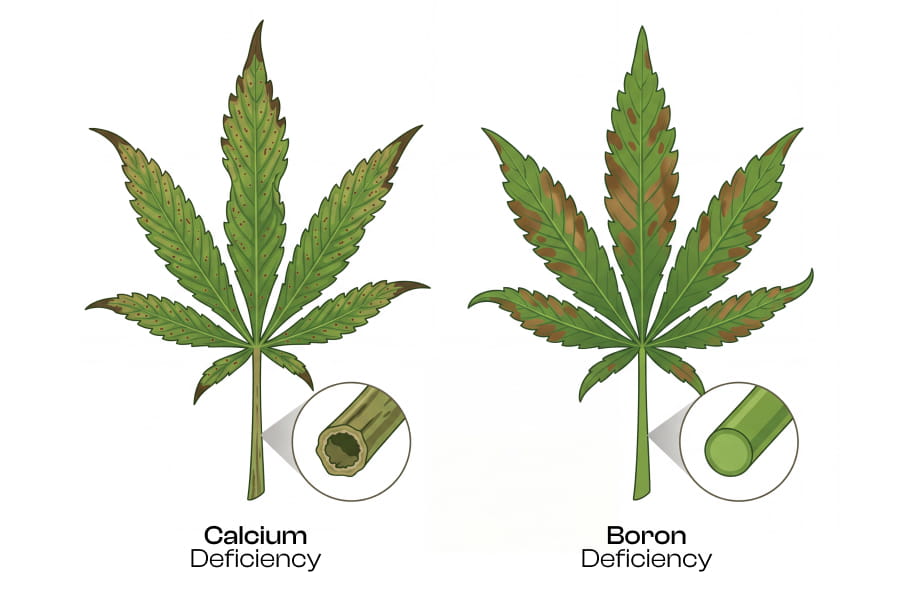
| Trait | Boron deficiency | Calcium deficiency | Reliability |
| Where symptoms appear | New/top growth | New growth | Medium |
| Spot size | Smaller brown dead spots | Larger brown spots | High |
| Growing tips | Twisted, gnarled, dying back | Less tip distortion | High |
| Stems | Hollow, rough | Usually normal | Medium |
| Common trigger | Underwatering, dry root zone, high pH | Low pH, cal-mag shortfall | Medium |
Use the spot size and the state of the growing tips as your high-confidence signals. If the damage spreads into older, lower leaves as well, it’s probably not boron at all, and you should look toward a mobile-nutrient issue like nitrogen or potassium instead.
Download my free marijuana grow guide for more growing tips.
How Do You Fix Boron Deficiency in Cannabis Plants?
Fixing boron deficiency starts with diagnosis, not dosing. First read pH and EC, since the fix order depends on what they show. If salts have built up from over-fertilizing, flush that out first, then correct pH on the clean baseline. If there’s no buildup, just correct the pH — which on its own resolves most cases. Only if symptoms persist after that do you reintroduce boron, and even then lightly.
Working through the steps in sequence keeps you from overcorrecting, which matters a lot with boron. Here’s the recovery path:
- Test pH alongside EC so you know whether salts have built up and where pH sits
- Flush only if salts have built up, using plain pH-corrected water until about 30% drains
- Correct the pH by medium, since that is what actually reopens boron uptake
- Reintroduce boron lightly, if it’s still needed
- Restore potassium and nitrogen if they’re also short
- Keep watering steady so boron keeps moving into new growth
- Watch the new growth for signs of recovery
New growth should start coming in normally within a few days once uptake is restored.
Correcting pH to Restore Boron Uptake
A bad pH reading is the most common reason boron gets locked out, so getting the root zone into range often solves the problem on its own, with no extra boron needed. Drift much past the ideal window, though, and you head toward the band where boron and the other micronutrients start locking out, so aim for the sweet spot rather than the edges.
In living, organic soil, keep pH in the 5.5 to 6.5 range (ideally 6.0 to 6.3). Check the runoff after watering as a signal of where the root zone sits. The microbes here manage pH themselves, so leave your water alone. If pH genuinely drifts, correct the soil slowly with amendments — lime to raise it or elemental sulfur to lower it.
In coco, hydro, or soil fed synthetic nutrients, you pH the input directly. Hold coco and hydro at 5.6 to 6.4 (ideally 5.8 to 6.2), and keep synthetic-fed soil in the soil range above. Read the runoff in coco or soil (or the reservoir in hydro), then mix your nutrients into the water and adjust that finished solution with pH Up or Down before feeding.
Reintroducing Boron Safely
A very light boron dose corrects a genuine shortfall, but a little goes a long way. Boron is one of the easiest nutrients to overdo, and too much causes its own toxicity problems, so err on the side of less.
A common approach is a small amount of boric acid diluted in water, roughly one teaspoon of boric acid per gallon, or a balanced cal-mag supplement that keeps boron and calcium in proportion. Fortify Pro, a liquid cal-mag supplement, is one option for keeping those levels topped up across any grow medium without overloading a single nutrient.
If the deficiency came with low potassium or nitrogen, water regularly with those nutrients too, since a boron shortage can drag down potassium uptake alongside it. And if your watering has been patchy, tightening up a steady routine helps the plant keep moving boron into its new growth, since that transport depends on the plant drinking consistently.
A boron shortage often shows up alongside a calcium deficiency or a potassium deficiency, and other trace-nutrient issues like a copper deficiency can look similar, so it’s worth checking those at the same time rather than treating boron in isolation.
Not sure if your plants have a boron deficiency?
Read the article Nutrient deficiencies in marijuana plants for a list with pictures of all deficiencies.
Prevent Boron Problems With Strong Genetics
The best defense against a boron deficiency is a plant with the vigor to handle small hiccups in the first place. With feminized cannabis seeds, every plant you feed and pH-balance is one you’ll actually harvest, so your nutrient attention isn’t split across males you’ll cull halfway through.
And because autoflower seeds run on a fixed clock with no vegetative do-over, stable genetics matter even more — there’s simply no time to nurse a plant back from a deficiency it was prone to from the start.
Healthy plants start with quality genetics, so it pays to buy marijuana seeds from a source you can trust.
Frequently Asked Questions
Is Boron Deficiency in Weed the Same as in Other Cannabis Plants?
Yes, boron deficiency works the same across all cannabis, whether you call it weed, marijuana, or anything else. The signs, causes, and fixes are identical, since they all come down to the same plant biology and the same immobile nutrient.
Does Fixing Boron Deficiency Work the Same in All Plants?
Mostly, yes. The core fix, correcting pH so roots can absorb boron and then reintroducing it carefully, applies to most plants. The specific pH ranges and nutrient products differ by species, so the cannabis targets in this guide are the ones to use for cannabis.
How Long Does Cannabis Take to Recover From Boron Deficiency?
New growth usually starts coming in normally within a few days once you’ve corrected pH (and flushed out any salt buildup). Damaged leaves and tips won’t repair themselves, but healthy fresh growth is the sign the fix is working.
How Do You Prevent Boron Deficiency in Cannabis?
Keep pH in range, avoid over-fertilizing, and keep your watering steady so boron can move through the plant, since that transport rides on the plant drinking consistently. Since most water already contains boron, prevention is mostly about protecting uptake rather than adding more.
Can Too Much Boron Hurt Cannabis Plants?
Yes, boron is easy to overapply, and too much causes toxicity that damages the plant in its own right. Always dose boron lightly and lean toward correcting pH first, since the shortage is usually a lockout problem rather than a true deficit.
Thanks for reading. Please leave comments or questions below and don’t forget to download my free grow bible
Robert

So it’s one teaspoon of borax to one gallon of water
Very helpful in learning what to look for this is my first time growing in a grow tent
Very helpful in learning what to look for this is my first time growing in a grow tent
I have a purpleish brown color coming out on the new growth of My 3 week old marijuana plants and I was wondering if you could give Me some insight as to what it may be? They also stopped growing.
I just finished my first grow gave myself a c+ grade it turned out to be worse than that. On my second grow now this article as well as the rest of them has been very helpful. Thanks!!!
[…] amounts, especially when compare to the macronutrients. Micronutrients include zinc, copper, iron, boron, manganese, and molybdenum. We’ll go into greater detail on exact nutrient requirements later […]
[…] Boron deficiency […]
I have found your articles very informative. I have printed off many. I have been growing for awhile and always wanting to learn more. I grow hydro and this article on boron is interesting I have seen this in my resent clones that I have received. now I know how to treat. thank you les